


Zahhak and the Ceramics of Kalpuregan

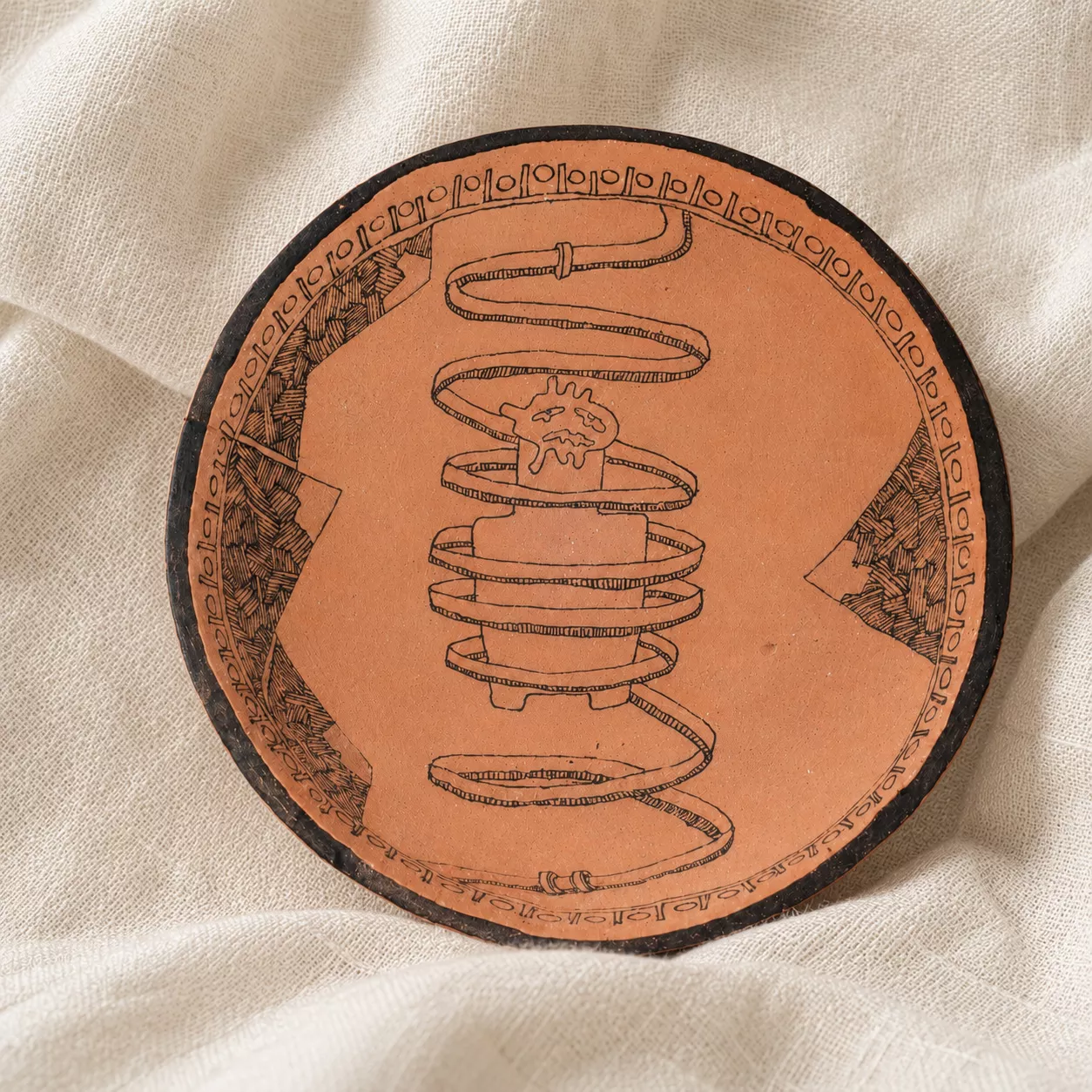
In many cultures, art is primarily seen in galleries and museums; but in Persian culture, art has always flowed through the heart of life. From the motifs found on ancient pottery to the patterns woven into fabrics, carpets, and functional objects, art in Iran has always been an integral part of the human daily experience.
If we look at Iran’s historical artifacts, we realize that many motifs and patterns are deeply rooted in nature. Flowers, branches, birds, and geometric patterns—all inspired by the inherent order of the natural world—have been repeated in Persian art for centuries. This repetition is not born of habit, but out of a profound respect for the cosmic order that exists in the world around us.
Alongside nature, myths and ancient tales have also played a significant role in shaping Persian art. Many designs are, in fact, reflections of narratives that have been passed down through generations via culture and rituals. These narratives have allowed a simple motif to transcend mere decoration and evolve into a potent cultural symbol.
One of the defining characteristics of Persian art is the seamless bond between beauty and utility. In the past, many crafted objects—beyond their practical use—carried a sense of aesthetic grace and deeper meaning. A jug for holding water, a vessel for food, or a fabric for daily use could all serve as a canvas for artistic expression.
This perspective has rendered the boundary between art and life in Persian culture rather indistinct. Art is not something separate from existence, but a part of it; it is present in homes, woven into rituals, and finds its true meaning in the simplest moments of life.
Today, many designers strive to carry this tradition forward—a tradition where objects are not created solely for display, but are designed to be lived with. In such a vision, design finds its true purpose when it strikes a perfect balance between beauty, utility, and culture.
Ultimately, perhaps this is the secret to the enduring legacy of Persian art: its ability to transform a simple object into a bearer of a narrative. A narrative that emerges from the past, continues through the present, and finds its meaning in the everyday lives of humans.